

Share
Designing energy-efficient cleanrooms: strategies and best practices
The importance
of smart HVAC-systems

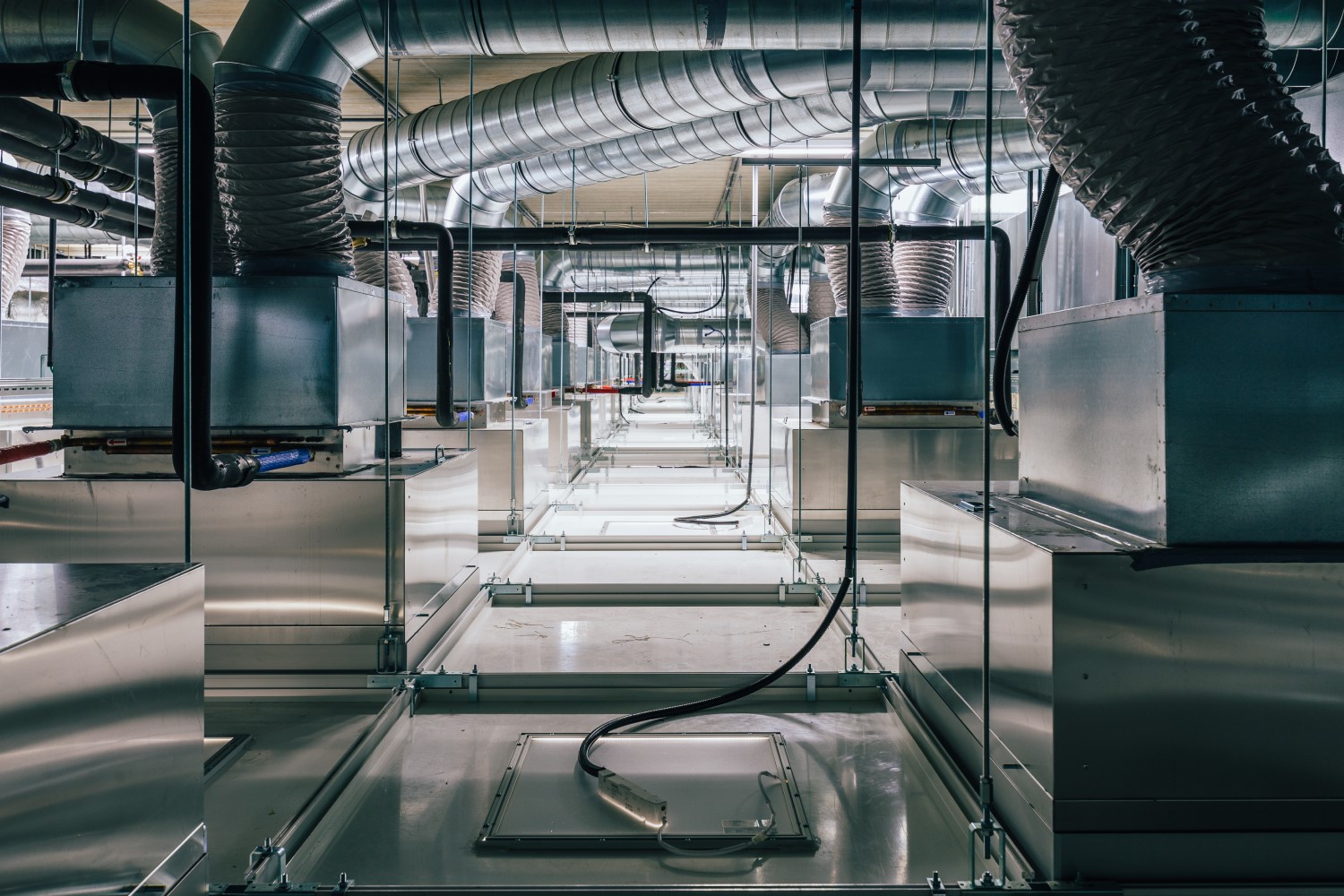
In cleanroom environments, HVAC is both the workhorse and the energy burden. To balance compliance, performance, and cost, a smart HVAC design (combined with modern control systems) is essential. Here’s how to do it well, and how Group Jansen applies these principles.
The HVAC challenge in cleanrooms
Cleanrooms often require high air change rates, precise temperature and humidity control, and differential pressures to maintain particle-control standards. These conditions make HVAC the primary driver of energy consumption, often representing 50 to 80 % of total facility energy use.
Optimizing airflow, filtration, and heat recovery strategies can dramatically reduce consumption while preserving compliance.
Recent studies show that integrating efficient recovery systems and adaptive airflow control can achieve 10–25 % annual energy savings, depending on the cleanroom class and operating profile.
However, energy efficiency must always be balanced with product integrity and contamination control—a principle emphasized in international best practices such as ISO 14644-16 and the ISPE Good Practice Guide: HVAC.
Key strategies for HVAC efficiency
1. Variable Air Volume (VAV) & Adaptive Control
Rather than running full airflow continuously, VAV control allows airflow to vary based on real-time demand. In cleanrooms, this means dynamically adjusting air change rates according to occupancy, process activity, or particle levels.
When paired with adaptive filtration management (monitoring pressure drops and contamination levels) VAV systems can reduce fan energy by up to 40 % while maintaining class stability.
2. Low-resistance filtration & smart filters
Filters impose a pressure drop, which directly drives fan energy consumption. Selecting low-resistance filter media (e.g., optimized pleat geometry, HEPA H14 filters) and using sensor-assisted monitoring reduces the energy demand of the ventilation system without compromising cleanliness.
Differential-pressure-based filter replacement, rather than fixed schedules, ensures both efficiency and extended filter life.
3. Heat recovery & air-to-air energy exchange
Recovering energy from exhaust air to precondition the supply stream remains one of the strongest levers for HVAC efficiency.
In cleanrooms, plate or coil heat exchangers are generally preferred over enthalpy wheels, as they eliminate any risk of cross-contamination between exhaust and supply airflows.
Properly designed, such systems can reduce heating and cooling loads by 10 – 25 %, contributing to significant lifecycle savings.
4. Integrated control via BMS/Smart Building Systems
A robust Building Management System (BMS) or intelligent control layer coordinates HVAC components, adjusts setpoints dynamically, and responds to process variations in real time.
IoT-enhanced BMS architectures and predictive control algorithms can optimize system performance, reduce drift, and anticipate deviations—delivering 13–25 % energy savings while maintaining GMP compliance.
5. Sequenced operation, scheduling & load shifting
Not every hour requires peak HVAC operation. Through smart scheduling and demand-based sequencing, airflow can be reduced during low occupancy or maintenance periods, while pre-conditioning can occur during off-peak hours.
Coordinating HVAC operation with production cycles and utility tariffs helps reduce both energy costs and equipment wear.

How Jansen Cleanrooms & Labs implements these principles
1. Initial Modeling & Simulation
Before selecting systems, we perform Computational Fluid Dynamics (CFD) and energy simulations to test airflow uniformity, recovery designs, and filter configurations.
This approach enables data-driven decisions that optimize comfort, cleanliness, and energy efficiency simultaneously.This approach enables data-driven decisions that optimize comfort, cleanliness, and energy efficiency simultaneously.
2. Adaptive Control Setup
We integrate open-protocol BMS architectures (BACnet/IP, Modbus) that support real-time adjustment, demand control, and analytics dashboards.
These systems form the backbone of a connected, responsive cleanroom, capable of adapting to process changes or environmental fluctuations without compromising compliance.
3. Commissioning & Tuning
After installation, we fine-tune control loops—pressure, temperature, flow—under real operational loads.
Each adjustment is verified to ensure that energy-saving modes stay within regulatory tolerances and process requirements.
Commissioning and qualification (C&Q) procedures, aligned with GMP and ISPE guidance, confirm that efficiency improvements never undermine performance or control integrit.
4. Lifecycle Monitoring
The BMS continues to track system performance beyond start-up: filter loading, fan curves, leakage rates, and energy performance indicators are monitored to detect degradation early.
Predictive maintenance ensures long-term consistency and supports continuous improvement across the cleanroom lifecycle.
Final thought
Energy-efficient cleanroom design begins with a smart HVAC concept, but true performance comes from adaptive airflow management, intelligent control, and continuous verification.
By combining technology, data, and lifecycle thinking, we can create cleanrooms that not only comply—but operate sustainably, reliably, and cost-effectively.
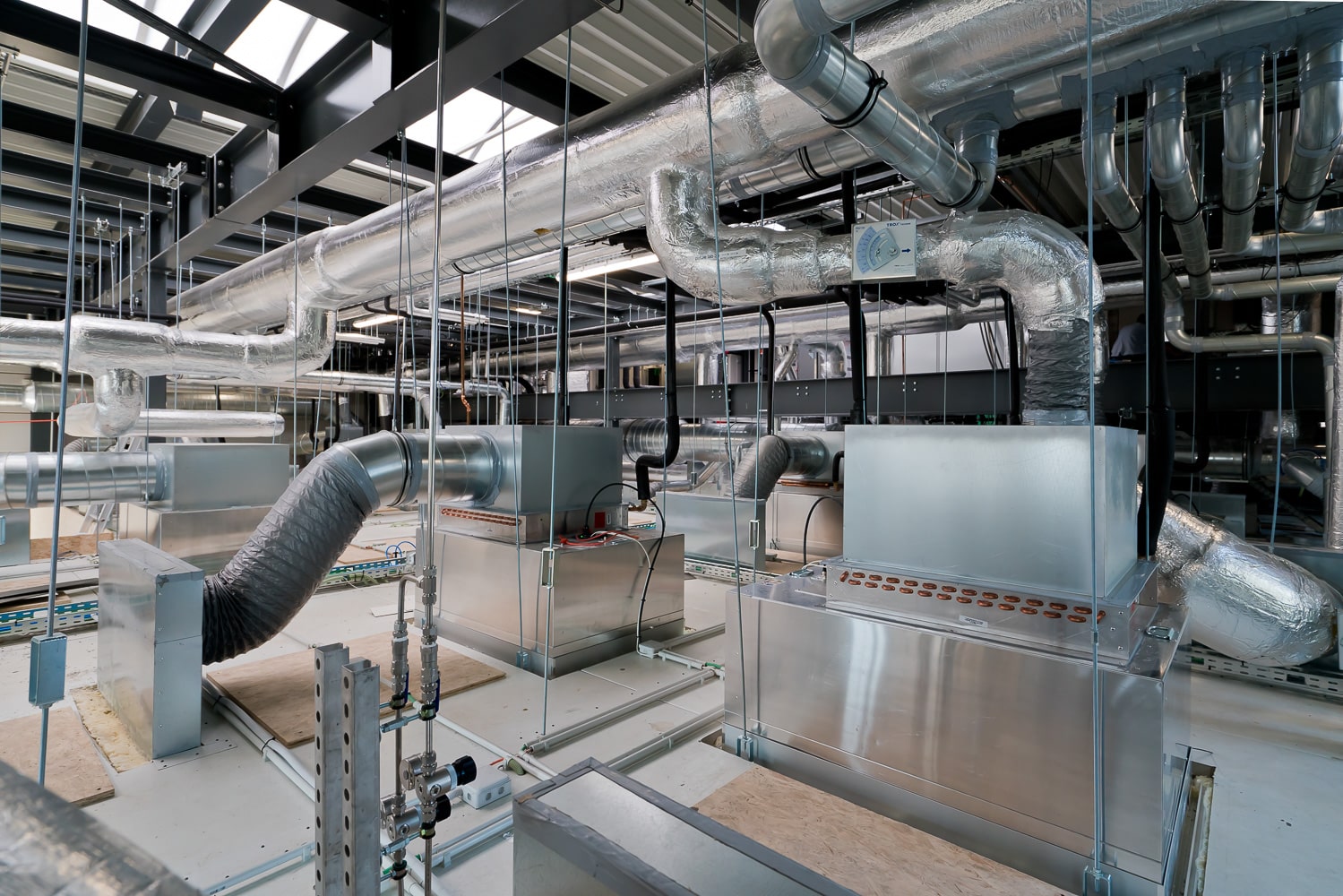

Ready to build a smarter, more efficient cleanroom?
At Jansen Cleanrooms & Labs, we design environments where compliance meets energy performance.
We combine advanced HVAC strategies, intelligent controls, and lifecycle monitoring to help you reduce operating costs without compromising quality or safety.
Contact our team today to explore how we can support your next energy-efficient cleanroom project.